Species → European Eel
European Eel
Anguilla anguilla
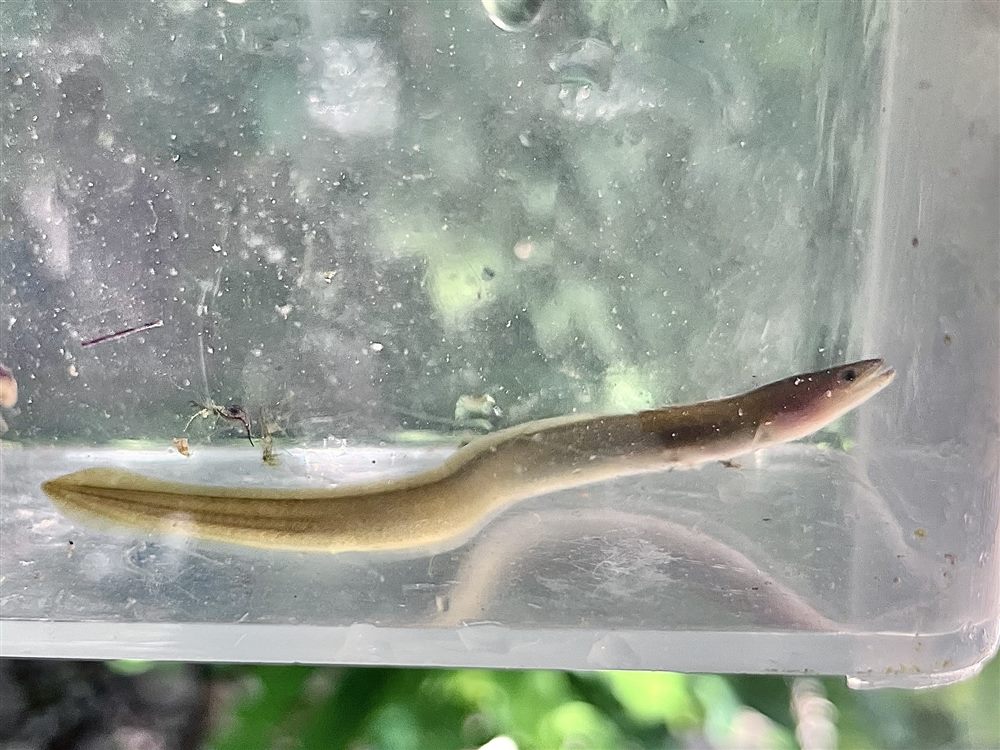
What if it disappeared?
Impact HighWithout eels, otters, bitterns and herons would lose their fattiest prey overnight and would have to immediately fall back on other fish — bullhead and stickleback chief among them. The diet shift would happen quickly in these opportunistic predators, but nothing guarantees it would feed them just as well.
ExtrapolatedDetail
Extrapolation à partir de Moorhouse-Gann, R.J., Kean, E.F., Parry, G., Valladares, S. et Chadwick, E.A. (2020). Dietary complexity and hidden costs of prey switching in a generalist top predator. Ecology and Evolution, 10(13), 6395–6408 — l'étude documente un changement de régime de la loutre vers le chabot et l'épinoche à mesure que l'anguille se raréfiait progressivement entre 1995 et 2010, pas une disparition brutale en un an.
The study examined 610 otters found dead in England and Wales between 1994 and 2010, analyzing stomach contents and prey remains. It documents a real shift toward bullhead and stickleback as eels became rarer in the diet — a process spread over fifteen years, which gives a sense of the kind of substitution to expect, without indicating how fast it would happen after a total, immediate disappearance.
What's missing to confirm it: No study measures how fast eel predators would shift their diet if eels disappeared all at once rather than gradually over fifteen years as observed in England and Wales.
That diet shift isn't enough to feed the otter as well: over the period when eel's presence in its diet dropped by roughly 75%, only eel consumption remained linked to better body condition — neither bullhead nor stickleback, though eaten more as replacements, showed that same association.
DocumentedDetail
Moorhouse-Gann, R.J., Kean, E.F., Parry, G., Valladares, S. et Chadwick, E.A. (2020). Dietary complexity and hidden costs of prey switching in a generalist top predator. Ecology and Evolution, 10(13), 6395–6408.
Among 610 otters examined in England and Wales between 1994 and 2010, the probability of finding eel remains in the stomach dropped from about 0.35 in 1995 to 0.09 in 2010. A positive association between eel consumption and body condition was measured (z = 2.23, p = .026), absent for bullhead and stickleback — a sign that these lower-calorie replacement prey do not nutritionally make up for the loss of eels.
Over a century without eels, Europe's rivers and estuaries would have lost a fish that historically weighed heavily in their biomass. Otters, bitterns and herons would likely have settled into a leaner, less fatty diet, in a physical condition generally worse than in the days of abundant eels — with no other fish species, lacking as generalist and burrowing a niche, truly filling that caloric gap.
HypothesisOver a thousand years, this would be less the loss of a single prey species than the severing of a bridge: the eel is one of the few fish that directly link, over an entire lifetime, Europe's rivers and the Atlantic Ocean, carrying marine nutrients inland and, in the other direction, entire generations toward a single presumed spawning ground. Without it, that link would stay severed for good — no other fish on the continent makes a comparable journey.
HypothesisDocumentation
-
IUCN Red List — Anguilla anguilla, statut de conservation
Accessed August 14, 2026
-
OSPAR Commission (2020) — Status Assessment, European Eel
Accessed August 14, 2026
-
Wright et al. (2022) — First direct evidence of adult European eels migrating to their breeding place in the Sargasso Sea, Scientific Reports
Accessed August 14, 2026
Last verified: August 16, 2026