Species → Eurasian Otter
Eurasian Otter
Lutra lutra
What if it disappeared?
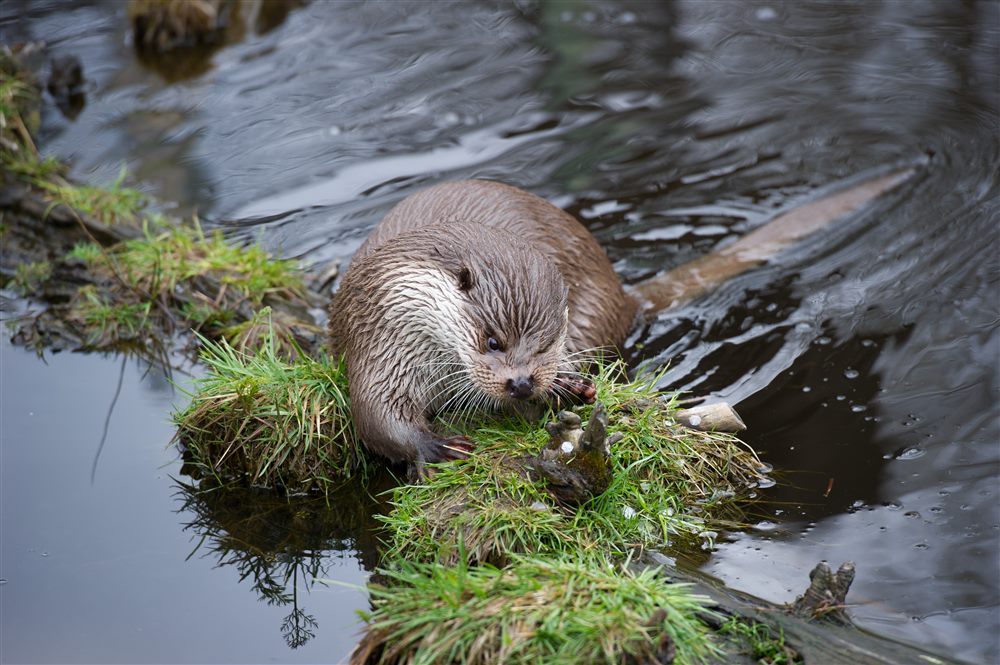
Impact LowWithout the otter, fish, crayfish and frogs in the streams and ponds it patrolled would suddenly lose their only aquatic mammalian predator: they would likely become less cautious and more conspicuous in the areas it used to frequent.
HypothesisBecause the otter feeds on a very wide range of prey depending on location rather than specializing on one, this relief would likely reach several populations at once — fish, crayfish, amphibians — rather than a single species booming: a diffuse pressure releasing across the whole web, not one lock giving way.
HypothesisThe otter genuinely took decades to reappear across most of central and northern Europe after its near-disappearance in the 1950s-1970s — half a century or more without it in some regions, and it still hasn't regained its full historical range today. An absence of that length would likely have given fish and crayfish communities in those waterways time to durably reorganize around the gap it left.
HypothesisOther opportunistic predators already present — herons, mink, pike — would likely fill part of that gap over time, but without recreating the same diffuse pressure across so many different prey species at once: a lastingly different web, rather than a return to what it was.
HypothesisDocumentation
-
IUCN SSC Otter Specialist Group — Eurasian Otter in Europe: Conservation Success (2025)
Accessed August 7, 2026
-
Mammal Society — The Eurasian otter: an at risk species and indicator of chemical contamination of freshwaters
Accessed August 7, 2026
-
Reid et al. (2012) — Review and quantitative meta-analysis of diet suggests the Eurasian otter is likely to be a poor bioindicator, Ecological Indicators
Accessed August 7, 2026
Last verified: August 16, 2026