Species → Giant Sequoia
Giant Sequoia
Sequoiadendron giganteum
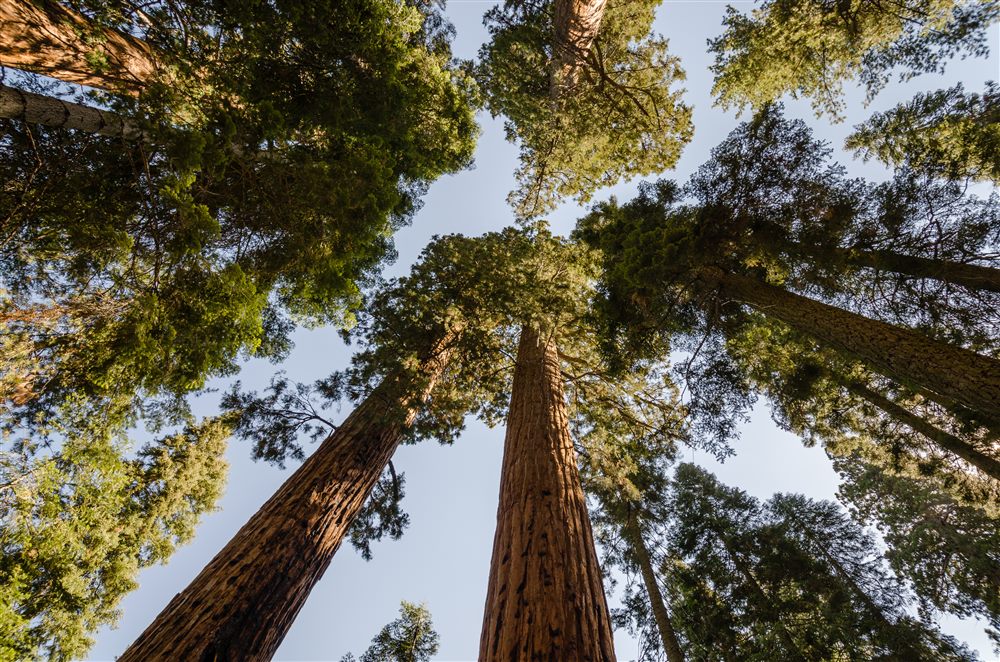
What if it disappeared?
Impact MajorIn the patches where the Castle Fire caused 93% mortality among large sequoias, the forest floor — normally shielded by their dense shade — is left exposed to full sun within a year, without the canopy that kept it moist.
ExtrapolatedDetail
Extrapolation à partir de Stephenson et Brigham (2021), qui mesurent la mortalité des séquoias par zone de sévérité de l'incendie, pas l'état du sous-bois qui en résulte.
The study establishes large-sequoia mortality by fire severity (up to 93% in high-severity areas) but does not measure what happens to the understory once the canopy is gone. The reasoning starts from the fact that large sequoias are among the tallest and most massive trees on Earth, casting dense shade on the ground below — their loss necessarily and quickly changes how much sun reaches the forest floor.
What's missing to confirm it: No study directly measures the state of the understory and soil moisture one year after such high mortality among large sequoias — the reasoning starts from their role as the dominant canopy, not a field measurement.
Ten years after losing its large sequoias, a grove would likely see the other conifers — already competing with its seedlings today — take over most of the open space, well before a young sequoia could have any chance of establishing there.
ExtrapolatedDetail
Extrapolation à partir du déclin déjà documenté (UICN) du séquoia géant, attribué en partie à une régénération insuffisante et à la concurrence d'autres conifères du vivant de l'espèce — pas à ce qui se passerait dans un bosquet qui l'aurait perdue entièrement.
The IUCN status assessment attributes part of the giant sequoia's decline to insufficient regeneration in the face of competition from other conifers, even while adult sequoias are still present to produce seed. If a grove lost its large sequoias entirely, this competition — already tilted toward other species today — would play out with no counterweight at all.
What's missing to confirm it: No study tracks a real grove after the total loss of its large sequoias to measure the exact pace at which other conifers would occupy the space.
A century after losing its large sequoias, a grove would likely look like any other ordinary Sierra Nevada conifer forest — without the thick-barked trunks that once resisted fire, the understory would plausibly be denser and more flammable, leaving the site more vulnerable to fire rather than better protected.
HypothesisOver a thousand years, even if young sequoias managed to sprout again, the ordinary conifer forest established in the meantime would likely take centuries to give them enough light and space to become giants once more — the giant sequoia itself lives for several thousand years, a pace too slow to make up for a thousand years of absence in a single tree generation.
HypothesisDocumentation
-
IUCN Red List — Sequoiadendron giganteum, statut de conservation
Accessed August 14, 2026
-
Stephenson & Brigham (2021) — Preliminary Estimates of Sequoia Mortality in the 2020 Castle Fire, USGS/NPS
Accessed August 14, 2026
-
Dixon et al. (2026) — Previous prescribed burns saved thousands of ancient sequoias during historically unprecedented wildfires, Nature Communications
Accessed August 14, 2026
Last verified: August 16, 2026