Species → Snowshoe Hare
Snowshoe Hare
Lepus americanus
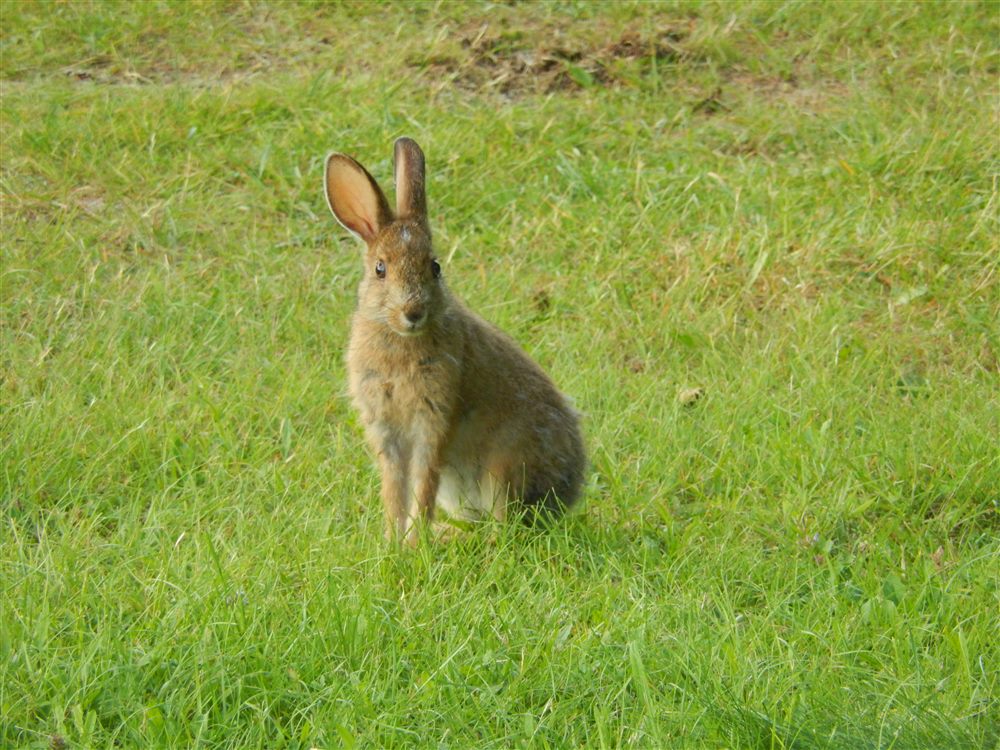
What if it disappeared?
Impact HighThe Canada lynx, whose numbers have tracked the hare's abundance with a one- to two-year lag for three centuries, would instantly lose its main food source — unlike the cycle's usual troughs, nothing would come back this time to feed it again.
ExtrapolatedDetail
Extrapolation à partir d'Elton et Nicholson (1942), qui documentent la corrélation cyclique entre les prises de lynx et l'abondance du lièvre sur plus d'un siècle, pas la disparition permanente du lièvre.
Hudson's Bay Company records show lynx numbers have faithfully tracked hare numbers for at least three centuries, with a one- to two-year lag — evidence of a tight dietary dependency. Those records document cyclical troughs always followed by a rebound; they say nothing about what would happen if the hare never came back.
What's missing to confirm it: No study measures what happens to the lynx when the hare disappears for good rather than simply passing through a cycle trough.
Unable to make up the shortfall with other prey for long, the lynx would collapse in turn across the boreal forest — for the first time in three centuries of records, its numbers would not rebound.
ExtrapolatedDetail
Extrapolation à partir d'Elton et Nicholson (1942) : le rebond du lynx après chaque creux est la régularité observée pendant trois siècles ; son absence après dix ans sans lièvre n'est pas elle-même mesurée.
The ten-year cycle documented since 1671 never shows an unbroken absence in the records Elton and Nicholson used — the lynx always eventually rebounded after each trough. A hare absent for ten straight years would break a pattern no available trade data has ever recorded, producing a lynx collapse rather than another trough followed by a rebound.
What's missing to confirm it: No record covers a full decade with no hares at all — only temporary troughs, always followed by a rebound, have been recorded.
Over a century without hares, the Canada lynx — a specialist that depends heavily on it — would likely have disappeared in turn from the affected regions, leaving the coyote and red fox, less specialized predators already present, to divide up its former place in the boreal forest.
HypothesisOver a thousand years, even if hares returned, the precise ten-year rhythm that made their cycle famous might not re-establish exactly as before: that rhythm depended on a specialist predator, and a generalist that filled in during the absence doesn't respond to the hare's highs and lows in the same way.
HypothesisDocumentation
-
IUCN Red List — Lepus americanus, statut de conservation
Accessed August 14, 2026
-
Elton & Nicholson (1942) — The Ten-Year Cycle in Numbers of the Lynx in Canada, Journal of Animal Ecology
Accessed August 14, 2026
-
Krebs et al. (1995) — Impact of Food and Predation on the Snowshoe Hare Cycle, Science
Accessed August 14, 2026
Last verified: August 16, 2026