Species → Kakapo
Kakapo
Strigops habroptilus
What if it disappeared?
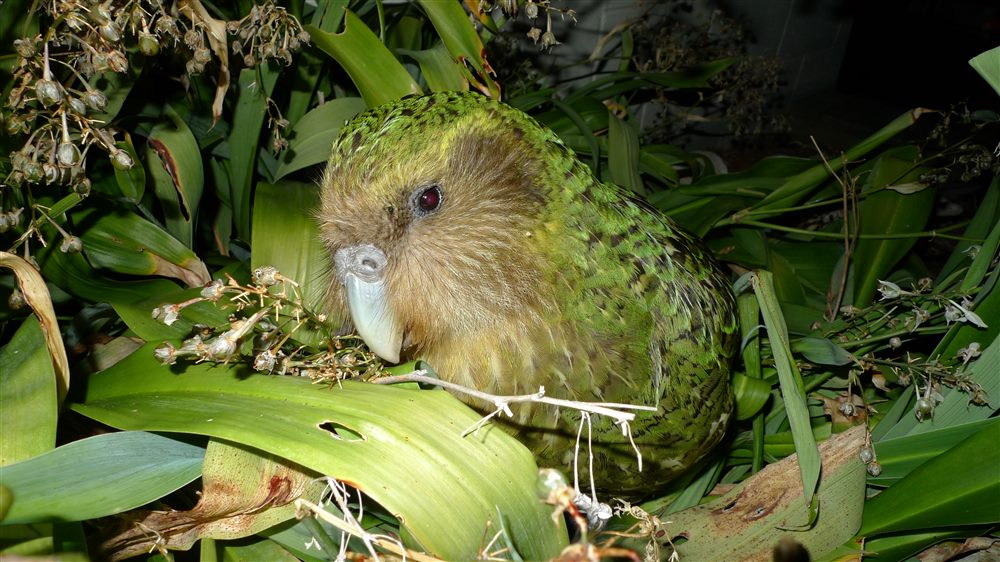
Impact ModerateWithout kakapo browsing mosses, ferns, and young shoots on the forest floor at night, this ground-level browsing pressure stops almost overnight on the few sanctuary islands where the species still survives.
HypothesisTen years on, that understory would likely grow denser and taller, with no other species stepping in to fill exactly that role: the only other native ground-level grazers on these islands are insects, not an animal the kakapo's size.
HypothesisThe kakapo already vanished from mainland New Zealand more than a century ago. There, introduced browsers like deer and possums took over part of the grazing pressure it left behind — but at a very different scale and in very different ways than a nocturnal, ground-dwelling parrot, reshaping the understory for good rather than simply preserving it.
HypothesisOver a thousand years, even a full kakapo comeback on the mainland would not recreate the same understory: the forest would have had time to adapt to an entirely different grazing regime, dominated by introduced mammals rather than a ground-dwelling bird — a plant landscape permanently different from the one the kakapo once shaped.
HypothesisDocumentation
-
Department of Conservation (NZ) — History: Kākāpō Recovery
Accessed August 14, 2026
-
Fidler, Lawrence & McNatty (2008) — An hypothesis to explain the linkage between kakapo breeding and the mast fruiting of their food trees, Wildlife Research
Accessed August 14, 2026
-
Mongabay (avril 2026) — Record kākāpō breeding season with 95 rare parrot hatchlings
Accessed August 14, 2026
Last verified: August 16, 2026