Species → Wolverine
Wolverine
Gulo gulo
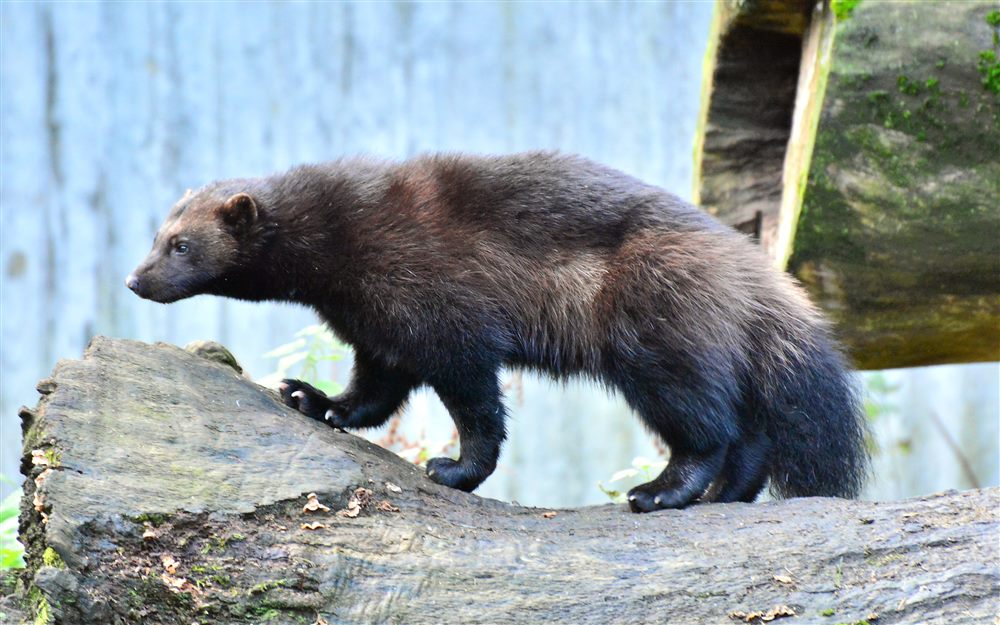
What if it disappeared?
Impact LowIf a wolverine disappeared from a boreal territory it holds, nothing would likely be visible within the first year: as a small opportunistic predator and scavenger, it consumes only a fraction of the prey and carrion available across a territory as vast as its own — too small a share to produce a measurable change in a single season.
HypothesisOver a decade, if its disappearance had any effect, it would first show up in smaller scavengers — foxes, ravens — that sometimes share the same carcasses: without a competitor able to break into the largest or most frozen carcasses, they would likely take longer to access that resource each winter, without the total amount of food available really changing.
HypothesisOver a century, prey populations and carrion availability in a wolverine-free territory would likely stay close to what's observed today: the other predators and scavengers of the same boreal ecosystem, more numerous and less specialized, would probably absorb the share it once held, without the food chain's overall makeup being upended.
HypothesisOver a thousand years, a boreal or arctic ecosystem permanently without wolverines would likely keep its overall structure: unlike an apex predator whose loss ripples through the entire food chain, the wolverine shares its role as a small predator and scavenger with enough other species that its absence would leave a subtle trace rather than triggering an ecosystem-wide shift.
HypothesisDocumentation
-
IUCN Red List — Gulo gulo, statut de conservation
Accessed August 14, 2026
-
Copeland et al. (2010) — The bioclimatic envelope of the wolverine, Canadian Journal of Zoology
Accessed August 14, 2026
-
Persson, Ordiz, Ladle, Andrén & Aronsson (2023) — Recolonization following past persecution questions the importance of persistent snow cover as a range limiting factor for wolverines, Global Change Biology
Accessed August 14, 2026
Last verified: August 16, 2026