Species → Beluga Sturgeon
Beluga Sturgeon
Huso huso
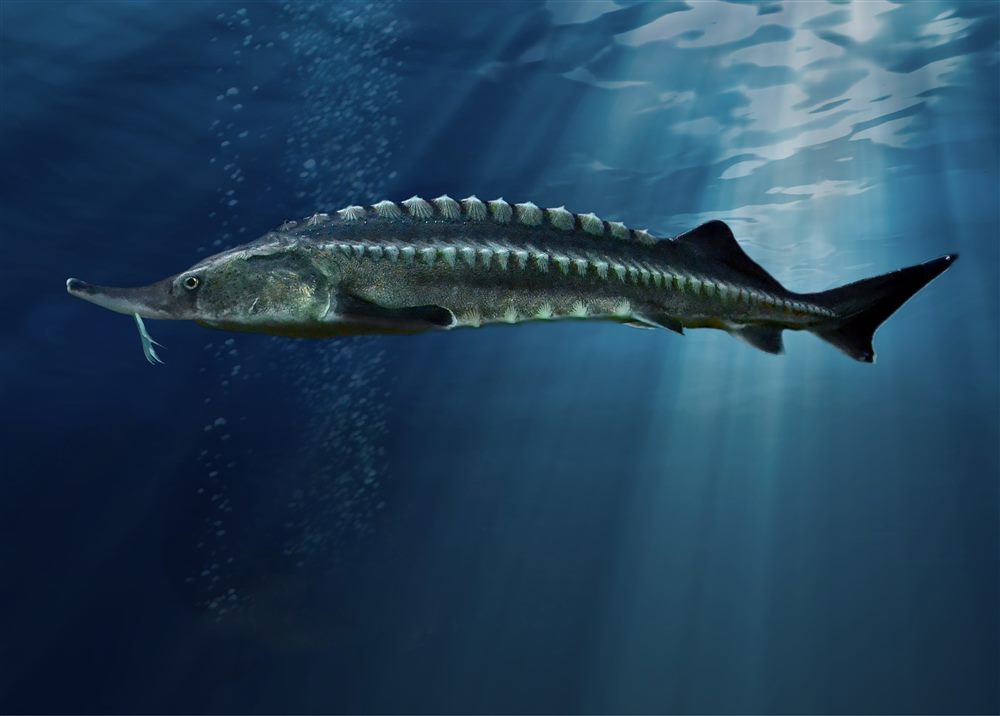
What if it disappeared?
Impact ModerateWithout the beluga, the predation pressure it exerted at the top of the Caspian Sea stops at once: the mullet, shad, gobies, and young sturgeon of other species that made up its diet are suddenly no longer hunted by the world's largest freshwater fish.
ExtrapolatedDetail
Extrapolation à partir de Bacalbaşa-Dobrovici (1997), qui documente le régime alimentaire du béluga adulte et son absence de prédateur naturel autre que l'humain, sans mesurer l'effet de sa disparition sur ses proies.
The study describes a diet that shifts with age — small pelagic fish for juveniles, gobies for intermediate individuals, mullet, shad, and other sturgeons for the largest adults — and notes that no natural predator besides humans preys on the adult beluga. By direct inference, this makes it the regulator of several prey species at once, with no other large predator automatically stepping in.
What's missing to confirm it: No study measures what happens to its prey populations (mullet, shad, gobies, young sturgeon) once the beluga disappears — only its role as top predator is documented.
After ten years without this predator, the species it hunted would likely have somewhat more room to grow — but in a Caspian basin where overfishing has also hit several related sturgeon and fish species, there's no guarantee that extra room would translate into genuinely larger populations.
HypothesisA century without the largest predatory fish in the Caspian basin, and the balance among the different sturgeon species that sometimes prey on each other would likely have shifted — without the beluga preying on the young of other sturgeons, those species might occupy a somewhat different place in the food chain, though no data can say exactly which.
HypothesisOver a thousand years, other predatory fish would likely have taken up some of the space the beluga left behind — but none come close to its exceptional size, reaching several meters and living past a century: the top of the Caspian food chain would likely remain occupied by smaller, more numerous predators, never again by a single fish capable of hunting other adult sturgeons on its own.
HypothesisDocumentation
-
IUCN Red List — Huso huso, statut de conservation
Accessed August 14, 2026
-
Bacalbaşa-Dobrovici (1997) — Threatened Fishes of the World: Huso huso, Environmental Biology of Fishes
Accessed August 14, 2026
-
Graham & Murphy (2007) — The Decline of the Beluga Sturgeon: A Case Study about Fisheries Management, Journal of Natural Resources and Life Sciences Education
Accessed August 14, 2026
-
IUCN — Sturgeon conservation: releasing hope (juillet 2025)
Accessed August 14, 2026
Last verified: August 16, 2026