Species → Iberian Lynx
Iberian Lynx
Lynx pardinus
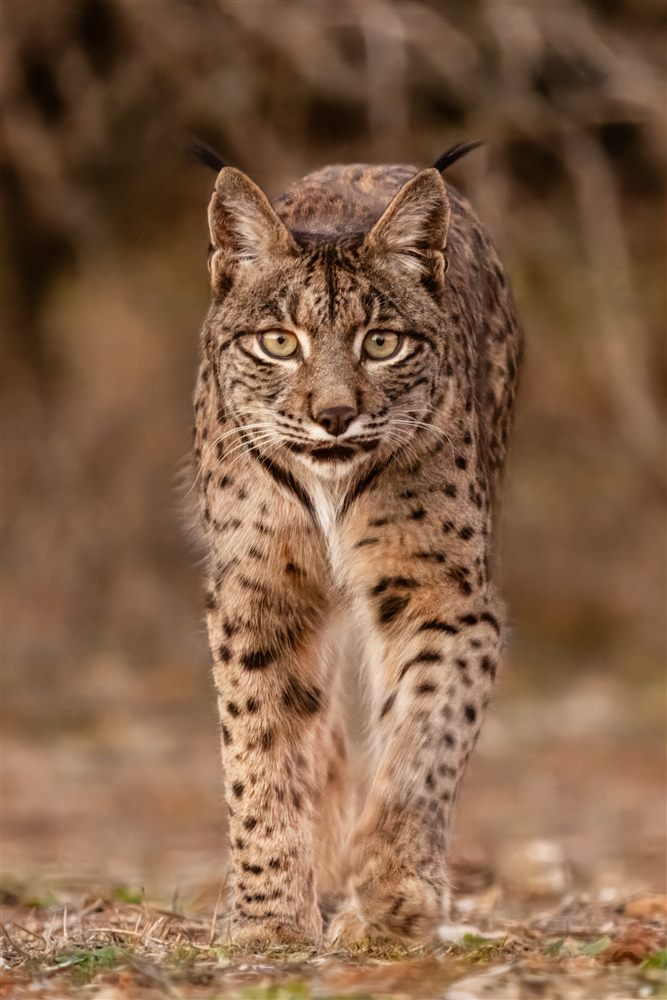
What if it disappeared?
Impact HighWithout the lynx, red fox and Egyptian mongoose — its main rivals for the same prey — have nothing left to keep their numbers down: when the lynx was reintroduced in Extremadura, their population dropped by about 80% almost at once, which shows, in reverse, what they become in its absence. Rabbit consumption by these carnivores together then rises by 55.6%, and both the European rabbit and the red-legged partridge pay the price directly.
DocumentedDetail
Jiménez et al. 2019, « Restoring apex predators can reduce mesopredator abundances », Biological Conservation, vol. 238, art. 108234 ; confirme le mécanisme déjà décrit par Palomares, Gaona, Ferreras & Delibes 1995, Conservation Biology 9(2):295-305.
The Iberian lynx occasionally kills foxes and mongooses that compete directly with it for rabbits, and its scent alone changes their foraging behavior. Jiménez et al.'s study compares zones before and after lynx reintroduction in Extremadura using density estimates from camera trapping — a quasi-experimental design that captures both the rise in fox and mongoose numbers and the rise in their rabbit consumption once the lynx is removed from the system.
That newfound freedom doesn't stop at prey: without the lynx to worry them, foxes and martens spend far more time searching for fruit, visiting wild pear trees much more often. The seeds of several maquis shrubs, which these same animals disperse by eating their fruit, could end up spreading differently over time.
ExtrapolatedDetail
Extrapolation à partir de Burgos et al. 2022, « Predation risk can modify the foraging behaviour of frugivorous carnivores », Journal of Animal Ecology : dans le Parc naturel de la Sierra de Andújar, les renards vivant en territoire de lynx consommaient 38 % de fruits en moins, et 70 à 100 % des visites de renards et de fouines aux poiriers sauvages avaient lieu hors des territoires de lynx.
Foxes and martens disperse the seeds of several Mediterranean fleshy-fruited trees by eating them. That the lynx reduces their fruit-foraging activity is measured directly by camera trapping; that this translates into a demonstrable effect on the seedling recruitment of these trees remains, by the authors' own admission, a logical extension yet to be confirmed by longer-term monitoring.
What's missing to confirm it: Multi-year monitoring of actual seedling recruitment (not just fox and marten visitation) would confirm or refute the effect at the plant population scale.
Over a century without the lynx, this double pressure — rabbits and partridges hunted more heavily for good, fruit dispersal changed — would plausibly have ended up reshaping the Mediterranean maquis: some fleshy-fruited shrubs spreading less easily, gradually replaced by plants less dependent on this animal-driven dispersal.
HypothesisOver a thousand years, fox and mongoose would have settled in as the maquis's undisputed top predators. Even if the lynx came back after all that time, it might not easily reclaim its place: its current recolonization, real but slow — 3,320 km² regained by 2022, up from 449 km² in 2005 — shows that this kind of rebalancing takes decades, not years.
HypothesisDocumentation
-
IUCN — Recovery of the Iberian lynx: A conservation success in Spain
Accessed August 7, 2026
-
IUCN — Iberian lynx rebounding thanks to conservation action (Liste rouge)
Accessed August 7, 2026
-
Jiménez et al. 2019, Restoring apex predators can reduce mesopredator abundances, Biological Conservation 238
Accessed August 7, 2026
-
Burgos et al. 2022, Predation risk can modify the foraging behaviour of frugivorous carnivores, Journal of Animal Ecology
Accessed August 7, 2026
Last verified: August 16, 2026