Species → Devils Hole Pupfish
Devils Hole Pupfish
Cyprinodon diabolis
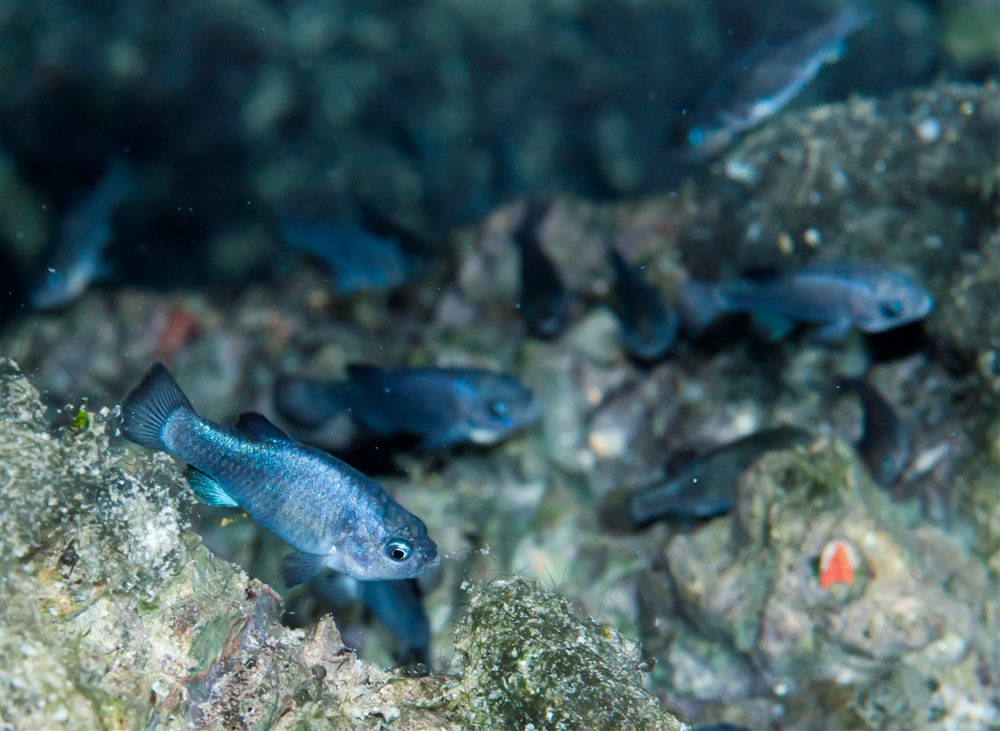
What if it disappeared?
Impact LowNothing would be left to graze the thin film of algae and microorganisms coating the single rock shelf where the species lives: it would likely thicken within the first months, shifting the already very low dissolved oxygen level in this 34°C water.
HypothesisThat thicker algal film would likely keep weighing on the shelf's already scarce oxygen over the following decade — a change confined to this 16 m² microhabitat, since no other known wild species depends directly on it.
HypothesisA century without the pupfish, the rock shelf would likely have settled into a lastingly different state: algal mats, dissolved oxygen, and microbial community reorganized around the absence of the only fish this pool has ever held.
HypothesisOver a thousand years, nothing would fill that void: the Devils Hole pupfish exists nowhere else, and no other fish has colonized this isolated cavern in several millennia — unlike most extinct species, its absence would remain permanent, with no possible replacement.
HypothesisDocumentation
-
IUCN Red List — Cyprinodon diabolis, statut de conservation
Accessed August 14, 2026
-
National Park Service (Death Valley) — Devils Hole pupfish population counts
Accessed August 14, 2026
-
Tian, Patton, Turner & Martin (2022) — Severe inbreeding, increased mutation load and gene loss-of-function in the critically endangered Devils Hole pupfish, Proceedings of the Royal Society B
Accessed August 14, 2026
-
Mongabay (mai 2024) — A tiny desert fish hits a 25 year population high
Accessed August 14, 2026
Last verified: August 16, 2026